|
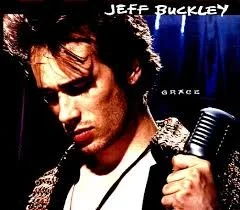
I recently read I Heard There Was a Secret Chord: Music as Medicine by neuroscientist and musician, Daniel J. Levitin. The book covers the incredible impact music therapy has across movement disorders, Parkinson’s, trauma, mental health, dementia, Alzheimer’s, stroke and more. You can hear my full review on the Summer Reading episode of Select Five that’s coming out this week. Subscribe wherever you get your podcasts! For this newsletter, I want to focus on Levitin’s thread throughout the book—including the inspiration for the title: The power of music is personal. There is no such thing as music that is inherently relaxing, motivating, energizing, healing, etc. Of course there are certain musical elements that tend to have a particular impact, but to be effective therapy you need a personal connection to a song or genre. It sounds so obvious. Yet can be so hard to not compare musical taste to whatever we perceive as cooler, deeper, more obscure, etc. To some people hardcore punk is relaxing. While jazz, which helps me focus, is a frenetic distraction to many. One of my favorite anecdotes from the book is about Joni Mitchell recovering from the stroke she experienced in 2015. The first time she smiled was when her nurses played the “Artist’s Choice” mix she made for Starbucks in 2005 (which is now on Spotify). Levitin, a friend of Mitchell’s, suggested they play this knowing how much the songs truly meant to her and how much energy she’d put into developing the playlist (I was also surprised to learn she didn’t phone in the assignment). An “Artist’s Choice” feels like an important thing for us all to have—and something our Select Five guests have a head start on. What would be on yours? One song that would definitely make my list is Jeff Buckley’s Hallelujah. It moves me every time. And now gets stuck in my head every time I think about the title of this book or pass my bookshelf. For those not familiar, the opening lyric (after an unforgettable breath) is “I heard there was a secret chord…” With all due respect to Leonard Cohen, Buckley’s is my preferred version and what Levitin includes on the 15-hour long playlist that chronicles every song he references in his book. I could go on and on (and I do in the podcast episode) about this book—the dozens of incredible stories about music helping to heal musicians and non-musicians alike, the encouragement to learn an instrument at any age, the need to push through parts that can be a bit scientifically and musically technical. But above all, what I appreciated the most is the permission and encouragement to love the music that moves you throughout life: Levitin ends with: “Your relationship to music takes place in a secret language, known only to you and her. The secret chord is you, the product of all your life’s encounters … And that chord is on the move, constantly changing, communicated in a language and a dialect you can understand intuitively without ever having to learn it or take lessons in it, a conversation that is continually evolving."
|